
Reflectance (%)
Wavelength
AR / BBAR Coatings
Low-reflection designs for improved transmission over selected narrow or broadband wavelength ranges.
Representative spectral performanceApplication-driven thin-film coating solutions for optical components from UV through infrared wavelengths.
Substrate material, wavelength range, angle of incidence, polarization, environmental exposure and required optical performance determine the appropriate coating design and deposition route.
Advanced coating technologies available based on application requirements.
Coating designs are engineered around substrate, wavelength range, angle of incidence, polarization and environmental requirements.
Low-reflection designs for improved transmission over selected narrow or broadband wavelength ranges.
Representative spectral performanceHigh-reflectance dielectric coating designs optimized for specified wavelength bands and incidence conditions.
Representative spectral performanceSpectral filtering designs that transmit a defined wavelength region while suppressing out-of-band energy.
Representative spectral performanceEdge-filter designs with controlled spectral transition for wavelength separation and system filtering.
Representative spectral performanceApplication-specific multilayer designs developed around target transmission, reflection and spectral requirements.
Representative spectral performanceCurves shown are illustrative only. Final spectral performance is defined by the approved coating specification.
Optical coating performance depends on both the thin-film design and the component beneath it. COE supports coating solutions for precision optical lenses, optical windows, mirrors and filter substrates across UV, visible and infrared systems.
AR and BBAR coatings improve transmission at selected wavelengths, while metallic or dielectric reflective coatings support beam steering and imaging. Bandpass, longpass and shortpass designs provide spectral control for optical filters. Protective solutions, including application-specific coatings for germanium optics, help components withstand demanding handling and environmental conditions.
For SWIR, MWIR and LWIR thermal imaging, coating designs are reviewed together with substrate transmission, operating band, angle of incidence and durability requirements.
Custom optical coatings are designed around the full optical system—not wavelength alone. Substrate, angle of incidence, polarization, durability and production volume are reviewed together to define practical spectral performance.
Single-band and broadband anti-reflection designs for UV, visible, NIR, SWIR, MWIR and LWIR optical components.
Metallic and dielectric solutions for custom optical mirrors, beam steering and imaging systems.
Bandpass, longpass and shortpass multilayers for optical filters and wavelength-selective instruments.
AR and application-specific protective options for germanium optics and demanding infrared environments.
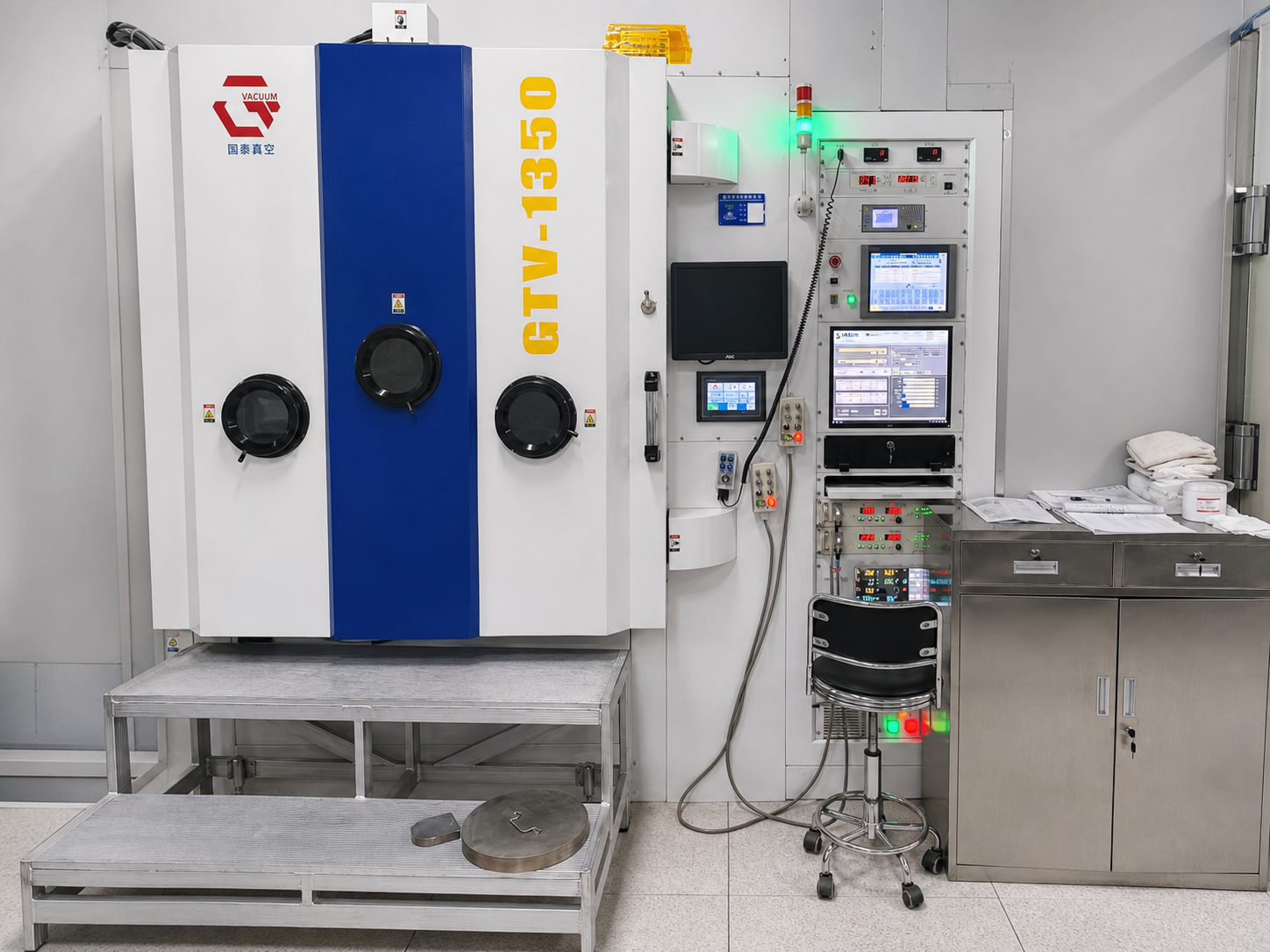
Different coating specifications benefit from different deposition approaches. Technology is selected according to optical performance, durability, substrate and production requirements.
Ion assistance can improve film density, adhesion and environmental stability for demanding multilayer coatings.
Dense, repeatable thin films suitable for precision optical coatings and controlled production processes.
High-performance deposition route for applications requiring dense films, excellent stability and precise optical control.
Monitoring and process control support repeatability of multilayer optical performance from design through production.
Provide the substrate, wavelength band, target transmission or reflection, angle of incidence, polarization, environment, clear aperture and quantity.
Some broadband designs can span selected visible and infrared regions, but the achievable range depends on substrate, performance target and incidence conditions.
Coating feasibility is reviewed from the component material, geometry, surface condition, masking needs, handling risk and required inspection documentation.
Aerospace optical coatings are selected around spectral performance, adhesion, temperature range, humidity, abrasion and the applicable environmental qualification requirements.
Send your substrate, wavelength and performance requirements for engineering review.