8–14 μm Performance
Optical configuration, material transmission and coating performance are coordinated for the required long-wave infrared band.
Custom LWIR thermal imaging lenses and germanium optics engineered for uncooled cameras, industrial sensing and demanding infrared systems.
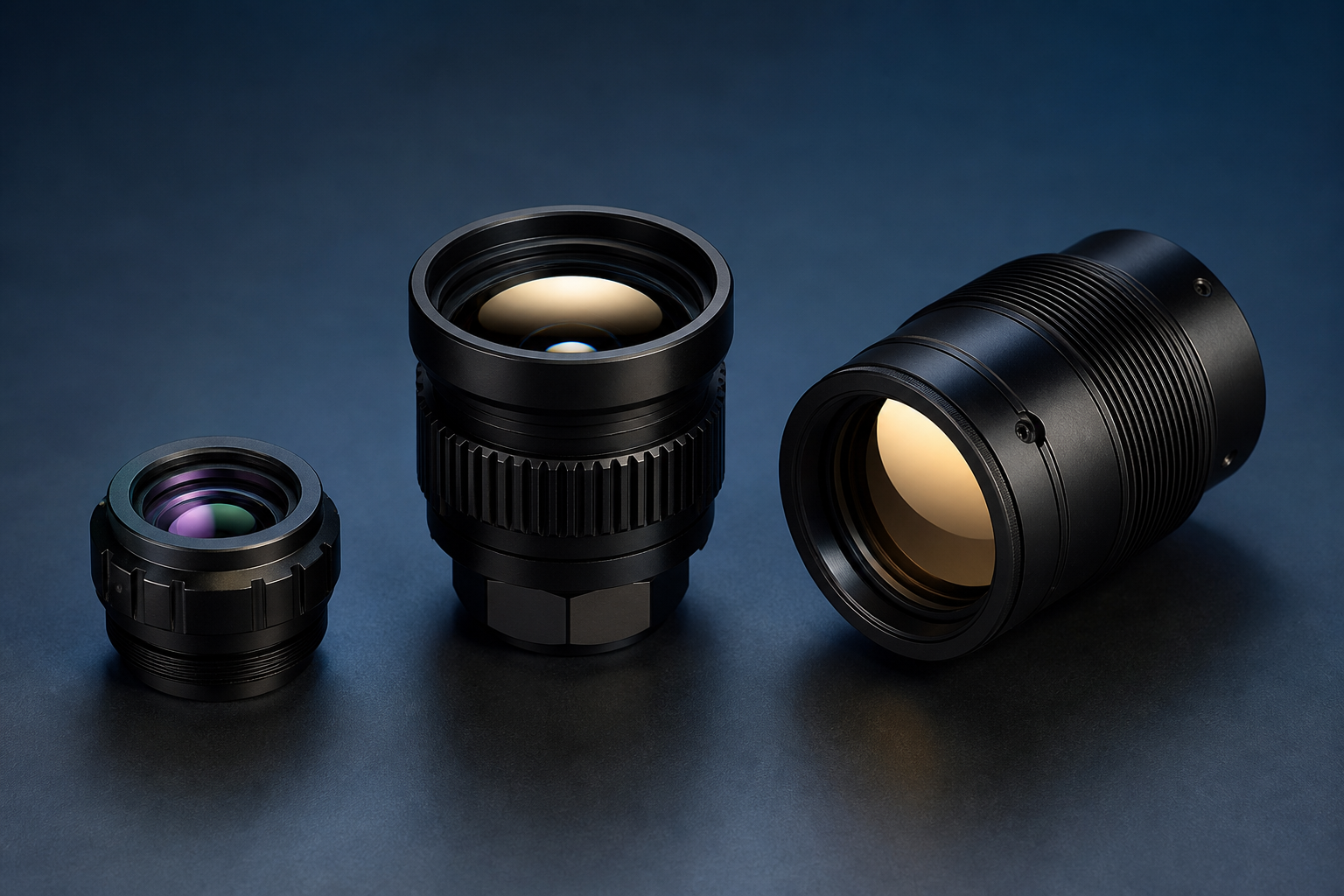
COE Sapphire develops custom LWIR optics for uncooled thermal cameras used in industrial thermography, fire and safety monitoring, perimeter security, predictive maintenance and environmental observation. Each project is reviewed around detector format, pixel pitch, focal length, F-number, field of view, operating temperature and housing constraints.
Optical configuration, material transmission and coating performance are coordinated for the required long-wave infrared band.
Lens requirements are matched to detector resolution, pixel size, image circle and thermal operating environment.
Optical and mechanical tolerances are reviewed together to protect image quality and support reliable assembly.
Germanium is widely used for LWIR systems because of its established transmission and manufacturing routes. Zinc selenide, zinc sulfide and selected chalcogenide materials may also be considered when weight, thermal behavior, multispectral transmission or production method requires a different solution.
Custom germanium lenses and windows for thermal cameras and 8–14 μm imaging systems.
Band-specific AR coatings reduce reflection loss. DLC may be specified on exposed germanium surfaces when abrasion and environmental durability are important.
Coating range, angle of incidence, transmission and durability are defined from the system requirement rather than coating name alone.
COE Sapphire supports spherical and aspheric infrared elements, protective windows and assembled LWIR lens modules. Services may include precision machining, optical polishing, diamond turning where appropriate, coating, centering, mechanical integration and final inspection.
Detector, focal length, F-number, field of view, distortion, temperature and environmental requirements are reviewed before specifications are finalized.
Prototype builds can be evaluated and transitioned into repeatable production after tolerance and manufacturability review.
Dimensional inspection, surface quality, centration, interferometry, spectral transmission and assembly-level optical testing can be defined by the project.
A representative custom germanium window manufactured for the 8–14 µm LWIR band. The 75 mm diameter and 5 mm thickness are combined with a durable DLC coating on the exposed surface and an antireflection coating designed for thermal imaging transmission.
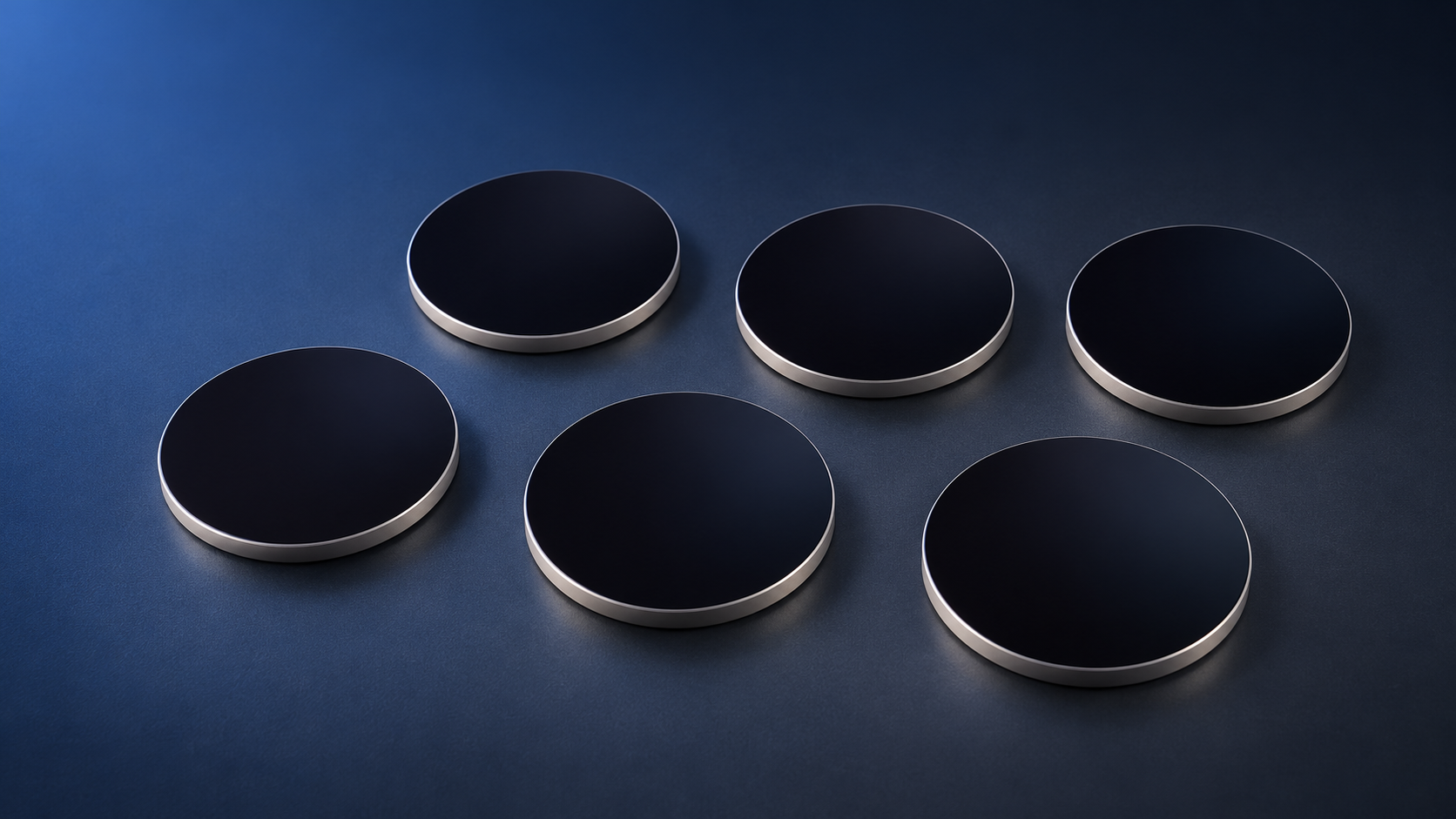
Material: Optical-grade germanium
Spectral band: 8–14 µm
Coating: DLC + AR
Application: LWIR thermal imaging and protective camera windows
DLC improves durability on an exposed germanium surface, while the AR design reduces reflection losses across the specified LWIR band.
Diameter, thickness, surface quality, flatness, edge geometry and coating performance can be specified for the detector and operating environment.
Inspection requirements are matched to the component, coating and completed thermal imaging assembly.
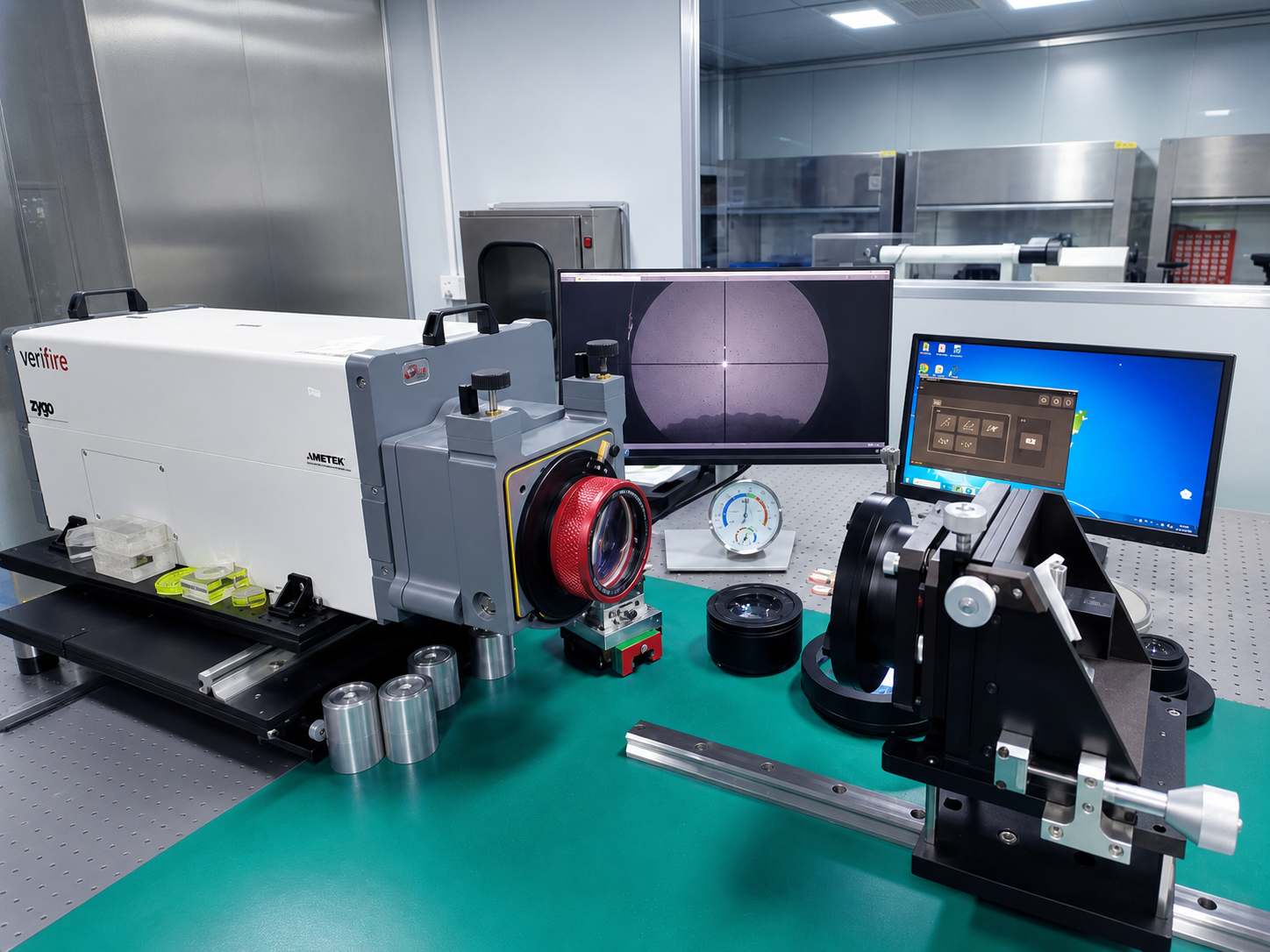
Surface figure, transmitted performance and dimensional requirements are verified according to the drawing.
AR, protective and DLC coating requirements are coordinated with material and environmental exposure.
Alignment and final optical performance can be tested at the completed lens level.
Send your detector format, pixel size, 8–14 μm transmission target, focal length, F-number and environmental requirements.